#5
Boron
metalloid· Solid·10.81 u
Boron is a metalloid chemical element with symbol B and atomic number 5. Produced entirely by cosmic ray spallation and supernovae and not by stellar nucleosynthesis, it is a low-abundance element in both the Solar system and the Earth's crust. Boron is concentrated on Earth by the water-solubility of its more common naturally occurring compounds, the borate minerals.
Read on Wikipedia
Identity
- Symbol
- B
- Atomic Number
- 5
- Atomic Mass
- 10.81 u
- Category
- metalloid
- Block
- p-block
- Period
- 2
- Group
- 13
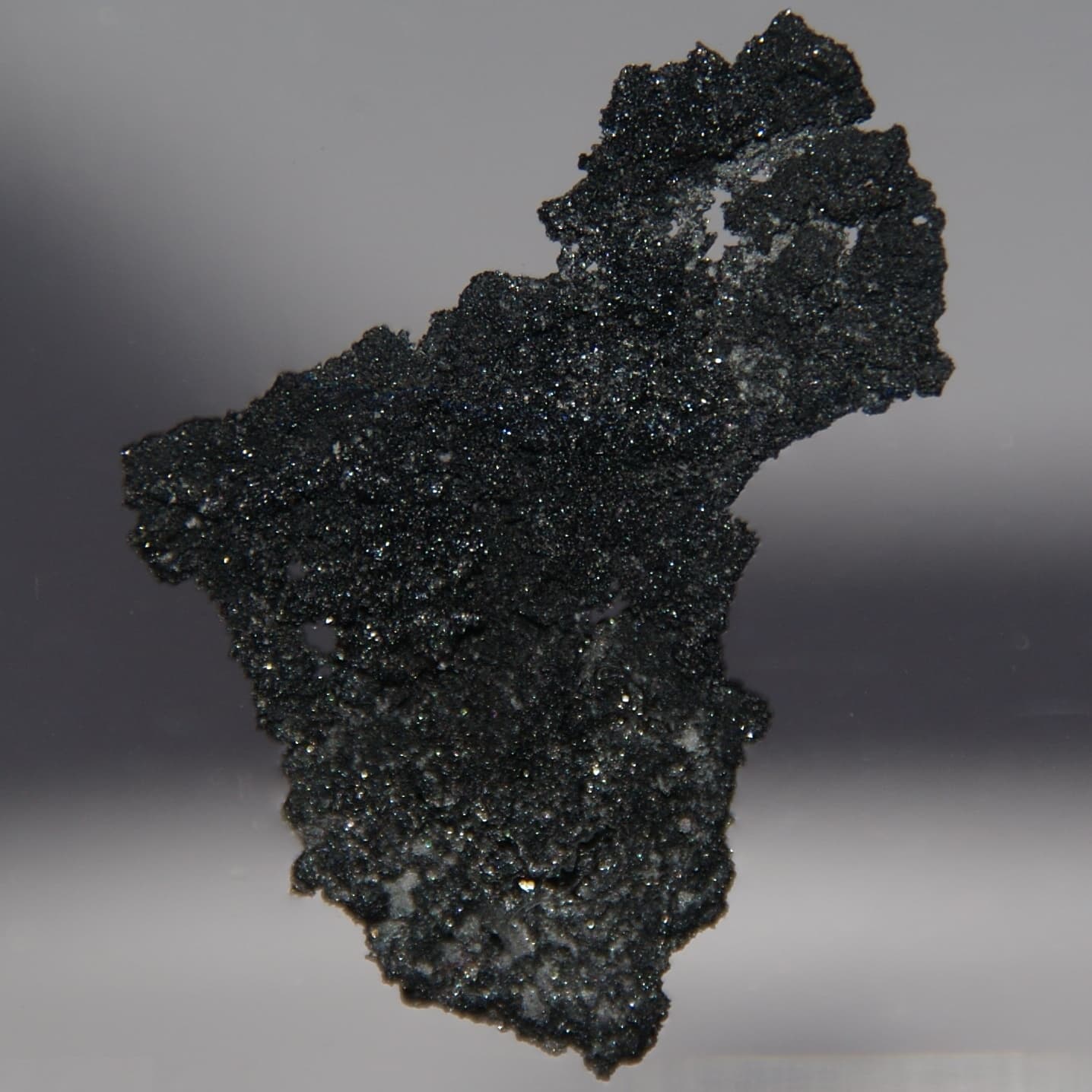
- Appearance
- black-brown
- Year Discovered
- 1808 CE
- Discovered By
- Joseph Louis Gay-Lussac
- Named By
- borax
Electrons
- Configuration
- [He] 2s2 2p1
- Full Configuration
- 1s2 2s2 2p1
- Shells
- 2, 3
- Electronegativity
- 2.04
- Electron Affinity
- 26.989
- Oxidation States
- +3
- Ionization Energies
- 800.6, 2427.1, 3659.7, 25025.8, 32826.7
Physical Properties
- State at
- Solid
- Melting Point
- 2349
- Boiling Point
- 4200
- Density
- 2.08
- Molar Heat
- 11.087 J/(mol·K)
- Crystal Structure
- Rhombohedral
- Magnetic Ordering
- Diamagnetic
Mechanical
- Atomic Radius
- 87 pm
- Covalent Radius
- 85 pm
- Van der Waals
- 192 pm
- Mohs Hardness
- 9.3
- Bulk Modulus
- 320 GPa GPa
- Shear Modulus
- 210 GPa GPa
- Young's Modulus
- 185 GPa GPa
Thermal & Electrical
- Thermal Conductivity
- 27.4 W/(m K) W/(m·K)
- Electrical Conductivity
- 0.0001 MS/m S/m
- Specific Heat
- 1026 J/(kg K) J/(g·K)
- Heat of Vaporization
- 508 kJ/mol kJ/mol
- Heat of Fusion
- 50.2 kJ/mol kJ/mol
Abundance
- Universe
- 1.00 ppb
- Sun
- 2.00 ppb
- Meteorite
- 1.6 ppm
- Earth's Crust
- 2080 ppm
- Ocean
- 4.44 ppm
- Human Body
- 700 ppb