#42
Molybdenum
transition metal· Solid·95.951 u
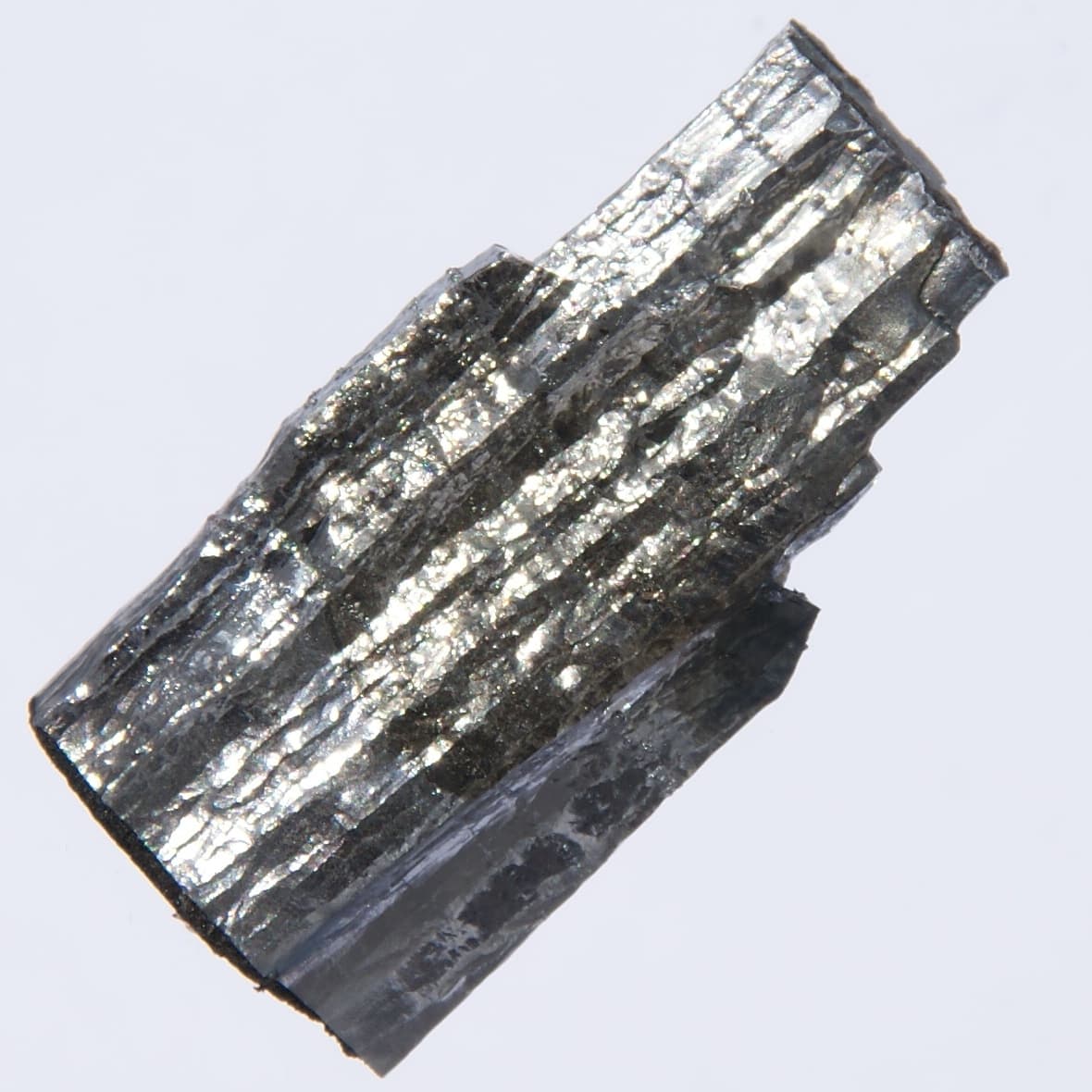
Molybdenum is a chemical element with symbol Mo and atomic number 42. The name is from Neo-Latin molybdaenum, from Ancient Greek Μόλυβδος molybdos, meaning lead, since its ores were confused with lead ores. Molybdenum minerals have been known throughout history, but the element was discovered (in the sense of differentiating it as a new entity from the mineral salts of other metals) in 1778 by Carl Wilhelm Scheele.
Read on Wikipedia
Identity
- Symbol
- Mo
- Atomic Number
- 42
- Atomic Mass
- 95.951 u
- Category
- transition metal
- Block
- d-block
- Period
- 5
- Group
- 6
- Appearance
- gray metallic
- Year Discovered
- 1778 CE
- Discovered By
- Carl Wilhelm Scheele
- Named By
- lead
Electrons
- Configuration
- [Kr] 4d5 5s1
- Full Configuration
- 1s2 2s2 2p6 3s2 3p6 4s2 3d10 4p6 5s1 4d5
- Shells
- 2, 8, 18, 13, 1
- Electronegativity
- 2.16
- Electron Affinity
- 72.1
- Oxidation States
- +6
- Ionization Energies
- 684.3, 1560, 2618, 4480, 5257 … +25 more
Physical Properties
- State at
- Solid
- Melting Point
- 2896
- Boiling Point
- 4912
- Density
- 10.28
- Molar Heat
- 24.06 J/(mol·K)
- Crystal Structure
- BCC
- Magnetic Ordering
- Paramagnetic
Mechanical
- Atomic Radius
- 190 pm
- Covalent Radius
- 154 pm
- Van der Waals
- 209 pm
- Metallic Radius
- 139 pm
- Mohs Hardness
- 5.5
- Brinell Hardness
- 1500 MPa MPa
- Vickers Hardness
- 1530 MPa MPa
- Bulk Modulus
- 230 GPa GPa
- Shear Modulus
- 120 GPa GPa
- Young's Modulus
- 329 GPa GPa
Thermal & Electrical
- Thermal Conductivity
- 138 W/(m K) W/(m·K)
- Electrical Conductivity
- 20 MS/m S/m
- Specific Heat
- 251 J/(kg K) J/(g·K)
- Heat of Vaporization
- 590 kJ/mol kJ/mol
- Heat of Fusion
- 37.5 kJ/mol kJ/mol
Abundance
- Universe
- 5.00 ppb
- Sun
- 9.00 ppb
- Meteorite
- 980 ppb
- Earth's Crust
- 10.28 ppm
- Ocean
- 10.0 ppb
- Human Body
- 100 ppb